


Our product stewardship
Love many. Trust few. Paddle your own canoe.
Businesses ought to be responsible for the downstream consequences of making and selling products.
 au — $ AUD



Significant positive changes are taking place in offices, communities and on national stages – disposable straws, bottled water, plastic bags and single-use cups are being banned. Ten years in, we are here to finish what we started.
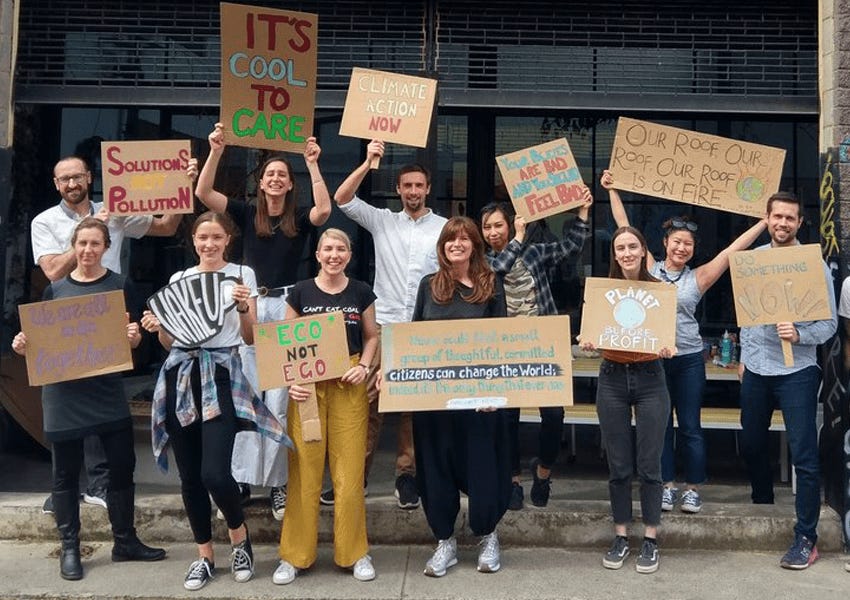
We believe collective individual action is a powerful catalyst for change. Carrying a KeepCup is a signifier of intention of the world we want to live in, so it’s important that we represent those values as an organisation.
In 2014 KeepCup became one of Australia’s founding B Corps.
B Corps are for-profit businesses committed to a new economy that is purpose driven, with businesses focused on making a positive difference to stakeholders, current and future generations and the natural world.
Our B Corp certification legally binds us to consider and report on our impact across five areas: workers, customers, suppliers, community and the environment. This detailed assessment ensures we deep-dive into our business practices every three years to drive measurable improvements – and we’ve been recognised four times (2018, 2019, 2021 and 2022) as B Corp Best for the World Honourees in the environment category.
Our current B Impact score is 121.8, with the minimum BCorp certification score being 80.
The best reusable is the one you use.
We continue to design, engineer and manufacture the best products with a rigorous focus on being fit for purpose, quality and enjoyment. Despite this, in the face of hyper consumption and the climate emergency, they are no substitute for a reusable product you already have.
Buy once. Buy well.
Reuse. Repair.
We believe in the power of cultural influence, not with a top down style maker approach, but a belief that the everyday choices we make shape the future. As sales of reusables soar, our focus is on impact more than ever. We measure our success in use and reuse, and increasingly in how workplaces, events and cities are going disposable free.
We’ve helped LinkedIn Dublin go single-use free, supported the Australian Open to drive reuse across their broadcasting and media centres, worked with the Bank of England to shift reuse rates from 10 to 80 percent amongst their 4,000 staff, diverted over 118,000 single-use cups from landfill with the University of Leeds and worked with Strawberry Fields to establish a reuse program for their 9,000 festival goers.
Credit: Strawberry Fields - Will Hamilton Coates

With a suite of tips, tricks and implementation programs, we help drive effective, long term behaviour change.
You can read more at KeepUP blog >
Our Impact Calculator enables individuals and companies to forecast and track their impact, including the energy, carbon and waste savings made by switching to reuse.
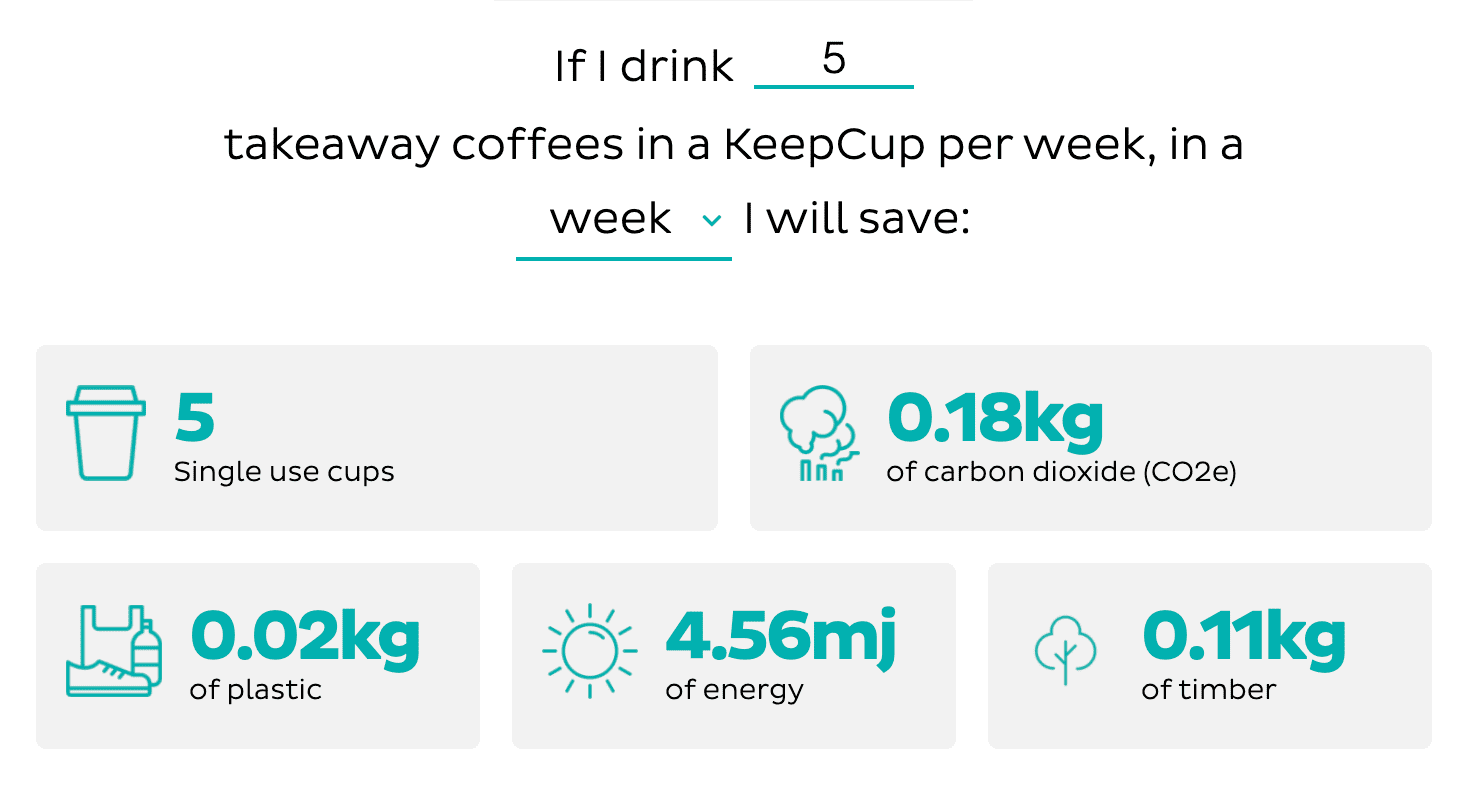
KeepCup is built upon the approach that we want every effort towards a carbon neutral planet to be supported. Being inclusive has been key to our success and the widespread use of our products, but so have our values.
We do not work for profit alone, we work for outcomes and in line with our values. No one comes to the impact conversation with clean hands, but we align our decision making, particularly around partnerships with the United Nations’ Sustainable Development Goals.
We see this as a part of our responsibility to the environment and the community, and we look forward to the day that this type of commitment is a part of ‘business as usual.’
Clean energy and climate action
Product designed to eradicate single-use waste
Reducing carbon and impact through our business
Solar powered Australian and UK hubs
Associate sponsor of Planet Ark Circular Economy Hub
Gender and equality
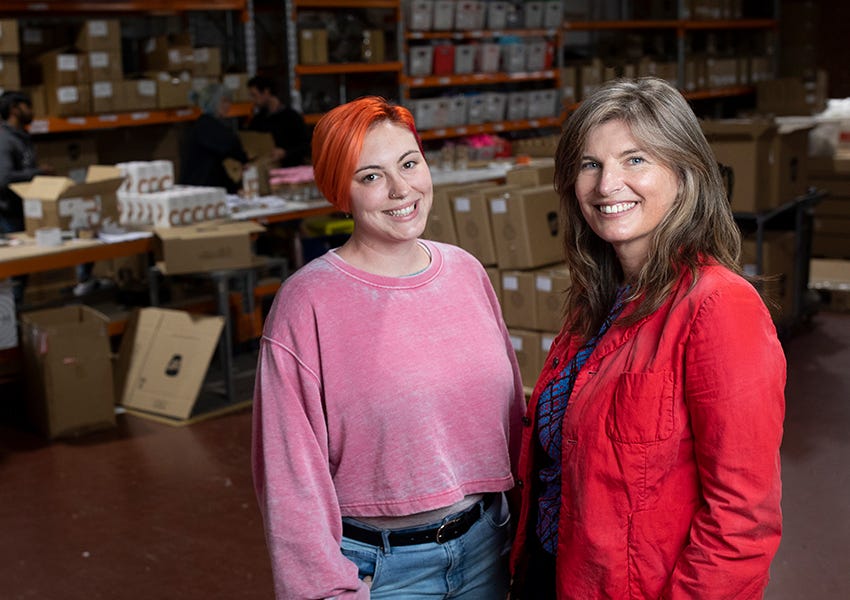
Leadership team > 50% female
Equal pay across gender
Certified living wage employer
Responsible consumption and production
Sell through on all stock and product
Campaign to support behaviour change around product using our impact calculator tool
Sustainable communities and innovation
Sustainability begins with design
Our mission to encourage reduce and reuse
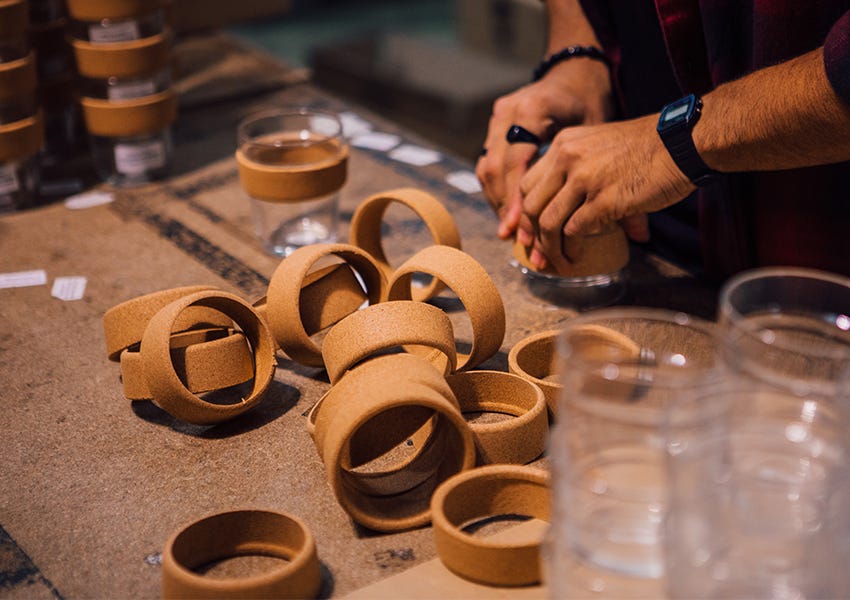
Local manufacturing and assembly

Sustainable food, land, water, oceans
Support of the circular economy and its impact on supply chain
Partnership with Sea Shepherd
Partnership with Bob Brown Foundation
Our products are designed with modularity in mind. KeepCups have as few parts as possible, and the use of common parts across multiple products means lost or damaged components can easily be replaced – so our customers can replace a part, not the product – reducing our products’ overall impact.
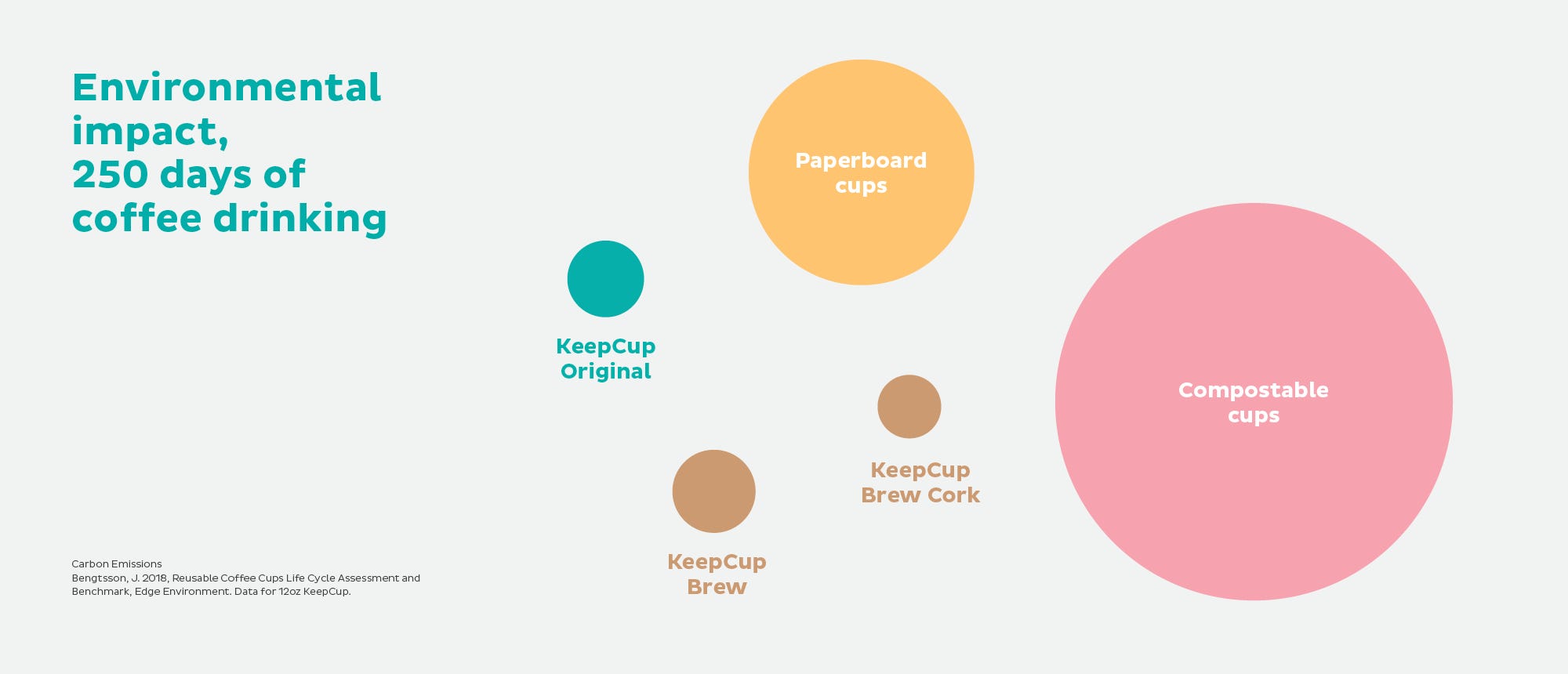
We work with sustainability consultants Edge Environment to assess the environmental footprint of our products against single-use and multi-use alternatives of various materials.
KeepCups have a lower carbon footprint than disposable and reusable alternatives.
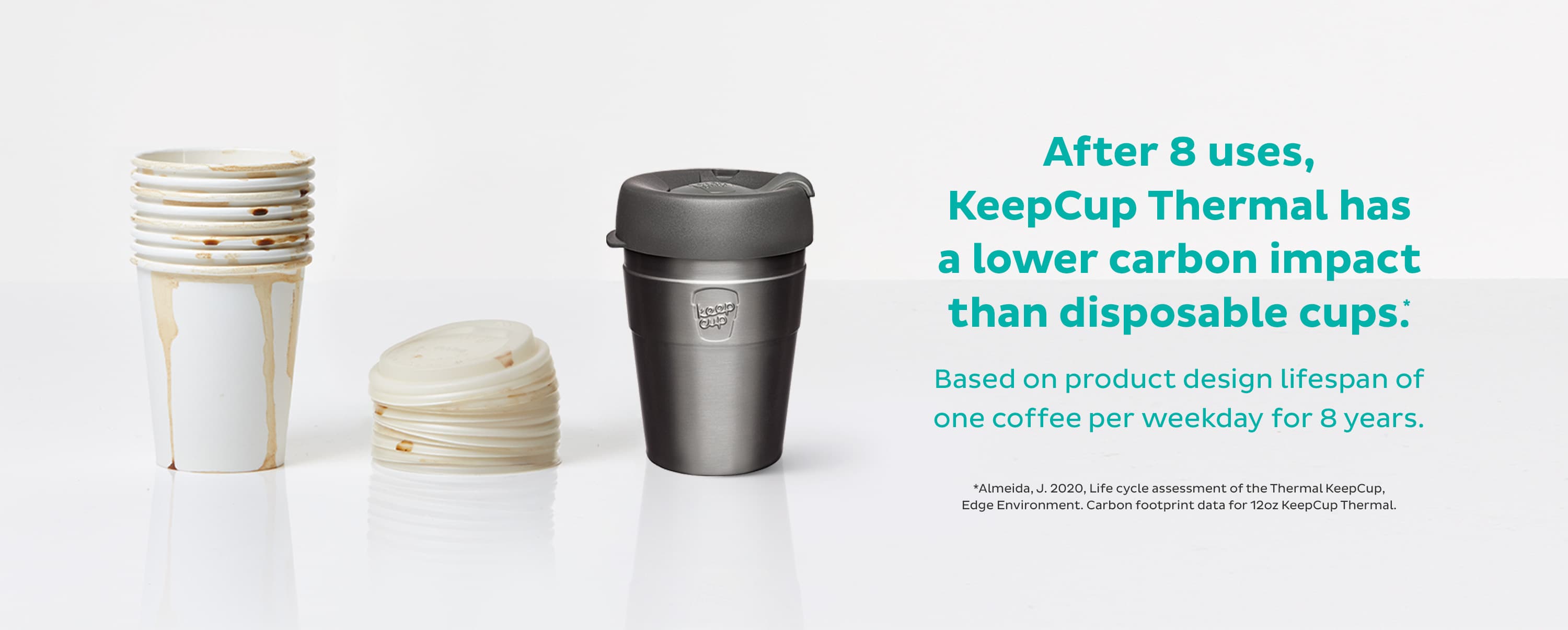
After just 4 uses KeepCup Thermal has lower carbon emissions than a compostable single-use cup. The same is true after 10 uses for our other products.
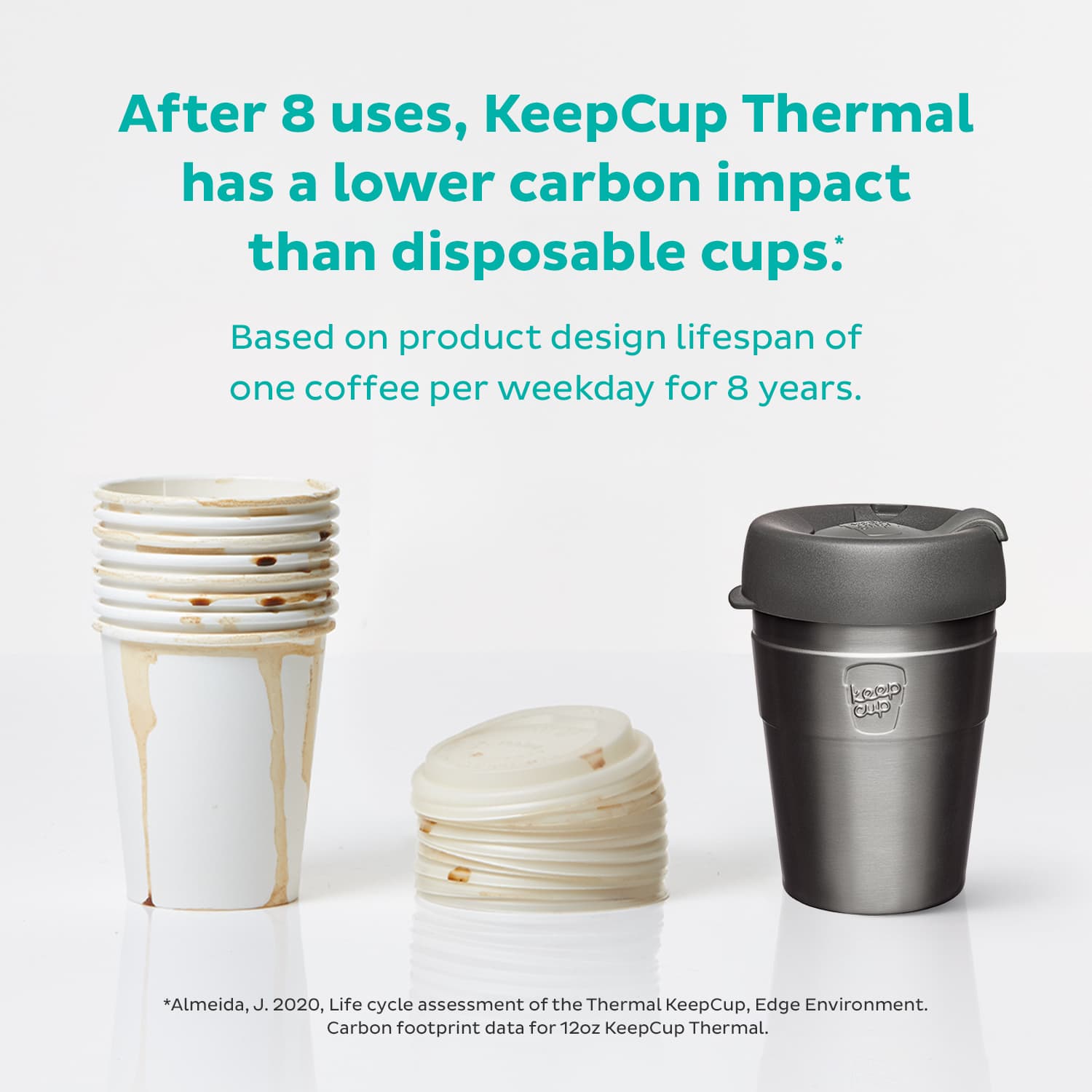
After 8 uses KeepCup Thermal has a lower impact than disposable cups, and after 24 uses for our other products.
This is based on drinking one coffee each weekday over eight years for KeepCup Thermal and one coffee each weekday over four years for Original and Brew.
Importantly, the Life Cycle Analysis identified hot spots in our supply chain, the importance of efficient wash practice in extending product life while lowering the footprint of a KeepCup, and helped us dispel some of the greenwash around materials and end of life solutions.
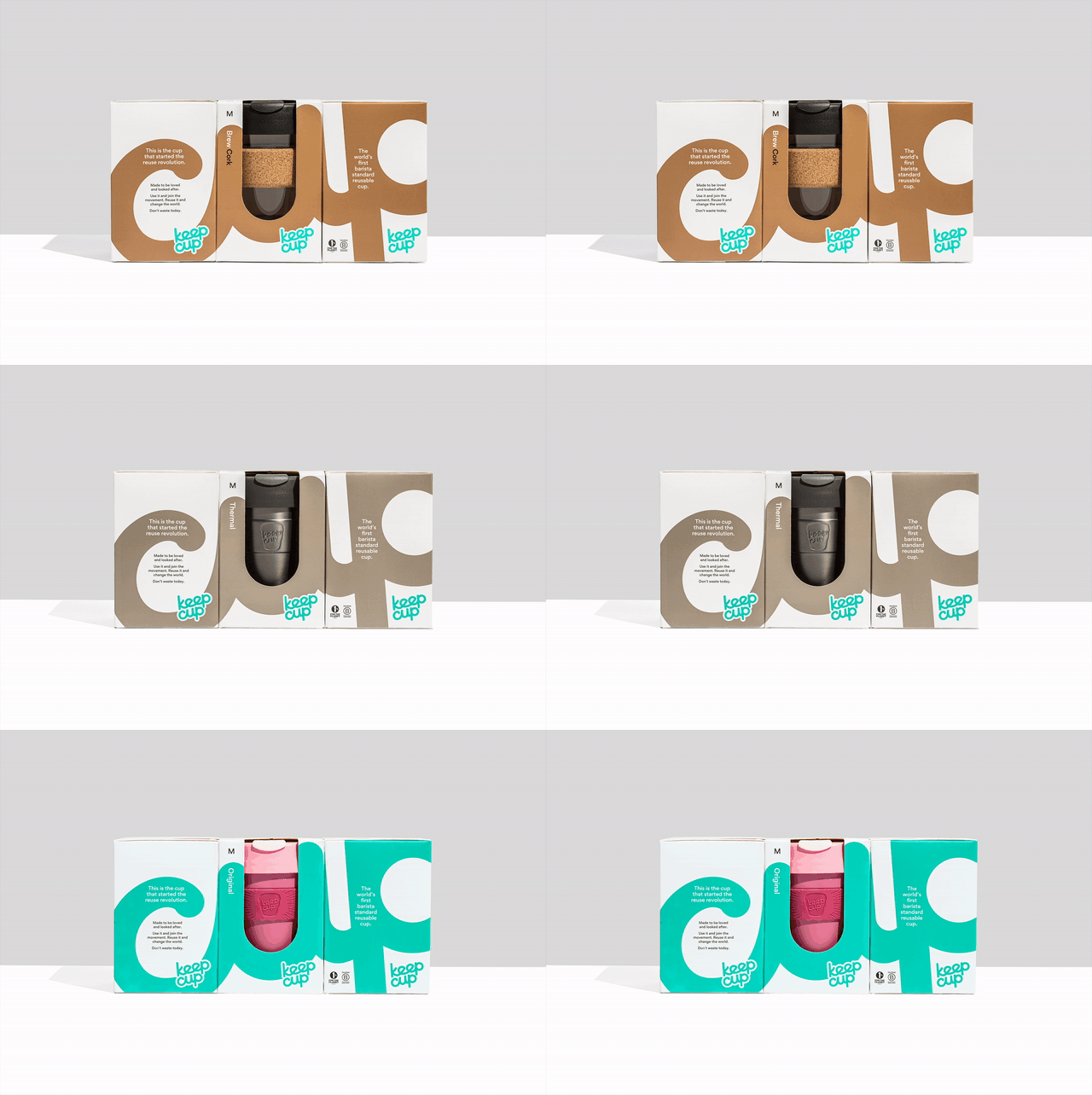
Reducing unnecessary waste is why we’re in business. Since the very beginning, we’ve partnered with our local manufacturers and designers to ensure our packaging protects the product, is modular, uses minimal material, can be reused and is recyclable.
Our retail packaging and outer mailer cartons are made locally in either Australia or United Kingdom and are entirely FSC certified cardboard, the cartons are made from 100% recycled board. To save on packaging we encourage delivery of product unboxed where possible, including tradeshows and bulk customer orders.
We redesigned our retail packaging and online mailers in 2019 which, in addition to enhancing the brand’s visual identity, has led to a 91% reduction in breakage and reduced material use by 39%.
Products manufactured in China are often delivered in individual plastic bags. Our stainless steel and glass products are no exception - but rather than accepting this delivery method, we worked with our manufacturers in China to deliver low impact packaging made from 100% cardboard. The new solution is quicker to pack, has removed the need for individual soft plastic sleeves and reduced the total packaging material used.
We reuse cardboard from pallet packaging as space filler, to protect KeepCup products in transit to customers as well as for delivery of unboxed product for bulk customer orders such as corporate gifting, events and tradeshows.
In 2019 we joined the Australian Packaging Covenant Organisation (APCO), to be a voice for reuse in recommendations to government regarding packaging transformation. Customers want and need reusable options and solutions beyond recycling.
Love many. Trust few. Paddle your own canoe.
Businesses ought to be responsible for the downstream consequences of making and selling products.
All waste from our warehouse assembly and customer returns is collected for commercial recycling. Local recycling is intrinsically connected to local manufacturing, it’s about having material consistency and a viable supply of plastic. However, this is complicated by the low cost of virgin plastic that makes recycling a loss-leading activity for many manufacturers.
It takes infrastructure, knowledge, tooling modifications and skills to reprocess old material into new product, highlighting the importance of local manufacture in the move to a circular economy.
In the UK, broken or faulty plastic KeepCup parts are taken to a local processor where they’re pelletised and remoulded into kerbside recycling boxes.
In Australia plastic KeepCup parts are returned to our manufacturer to be remade into industrial parts.
We currently collect and store our silicone bands while we look for a local commercial recycling solution. It has proven difficult to recycle our low volume of silicone given the prevalence of other rubber-like material (such as tyres) which commercial recyclers have access to.
Our faulty glass is ground down and recycled locally into either bottles, glasswool insulation or used to replace sand in road base. Recycling into road base is polarising, as it locks material into a product from which it can’t readily be extracted and recycled again. However, in road base, the glass that may otherwise end up in landfill, replaces sand which is a finite resource, so we view this as a win until local infrastructure and manufacturing can support low volumes of recycled glass being used in new products.
Customer returns and reject parts from our warehouses are sent to local commercial recyclers. In Australia, it is collected with other metal materials and shipped to Germany for reprocessing, where it is then sold on to production mills.
Mixing scrap metal with raw materials is standard practice in stainless steel production, which globally contains an average of 25% recycled content, due to the material’s long life and high demand. KeepCup Thermal products are made from 35% recycled stainless steel.
As a global business, transport of our products is a key area of focus, which is why we choose local manufacture for local markets, where volumes and production capacity allow. 41.5% of our supplier spend is on suppliers within 80km of our hubs. See more about our manufacture and assembly.
We choose sea shipping over air freight and work with each of our suppliers to minimise impact in all possible areas. We also encourage our team to have virtual meetings and make cycling an accessible commute option to and from work with secure bike parking and showers.
And when it comes to our buildings, we adopt energy-saving measures including LEDs, sensor lights and energy efficient appliances as the baseline, making the extra effort to minimise our impact.
Our offices have been solar powered since 2015 in Australia, and 2018 in the UK.
In 2019 we installed 76 KW of solar power on our roof in our new Australian offices. We use eleXsys -electricity export system, Planet Ark Power's technology, to export excess power back into the grid.
Our UK and Australian buildings harvest rainwater to flush toilets and water gardens.
In Australia some clever friends also lifted the concrete slab and turned it into furniture, providing permeable earth and a robust outdoor area.